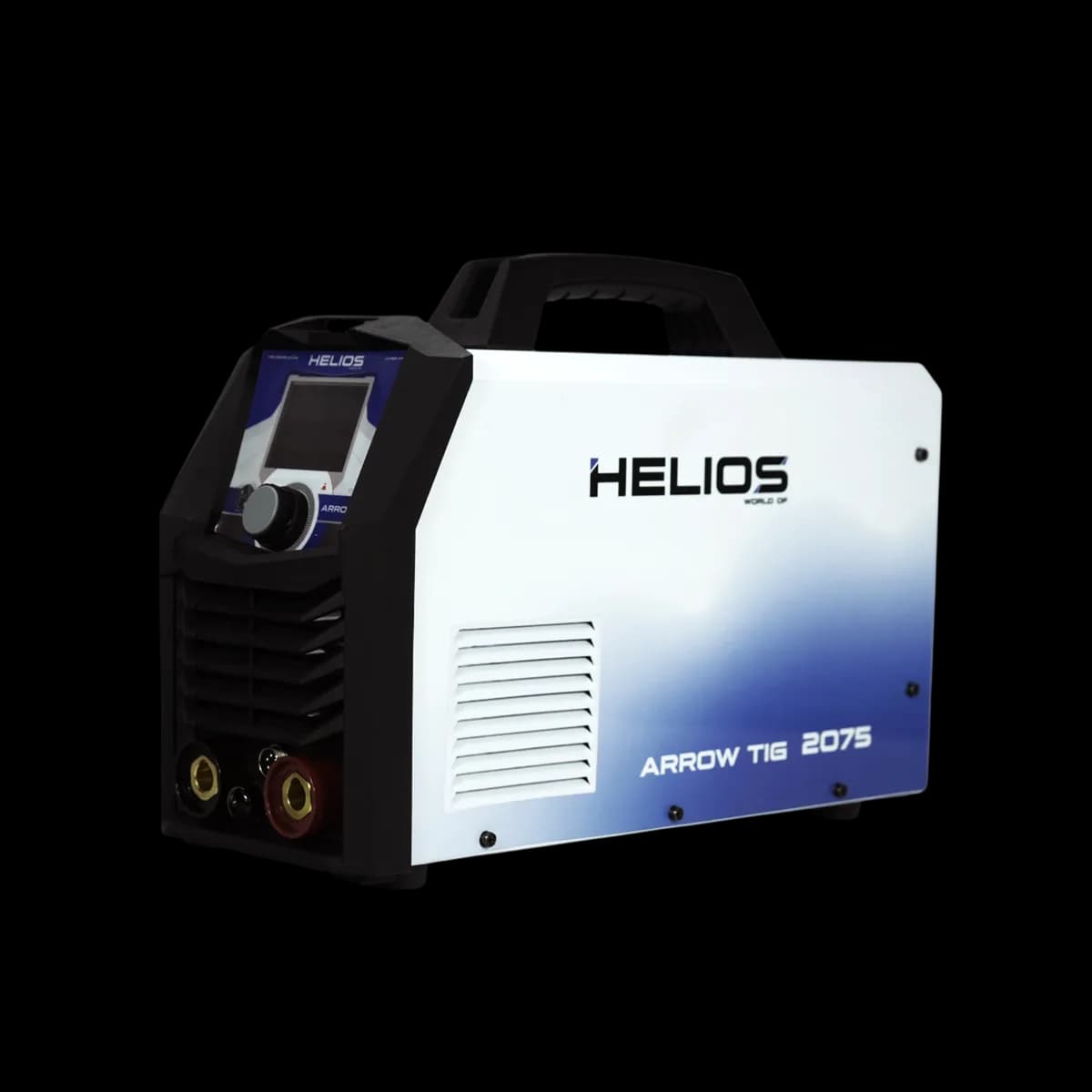
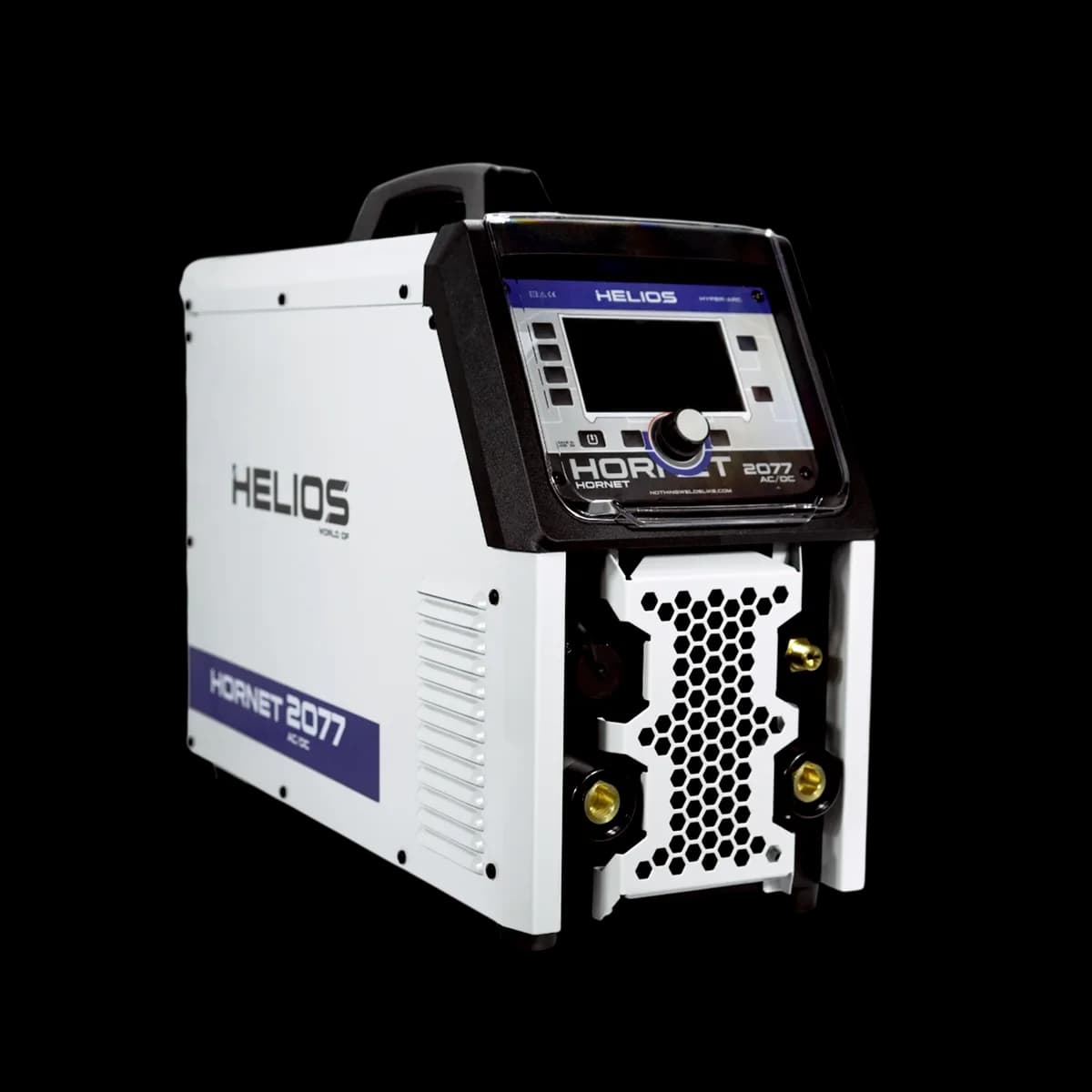
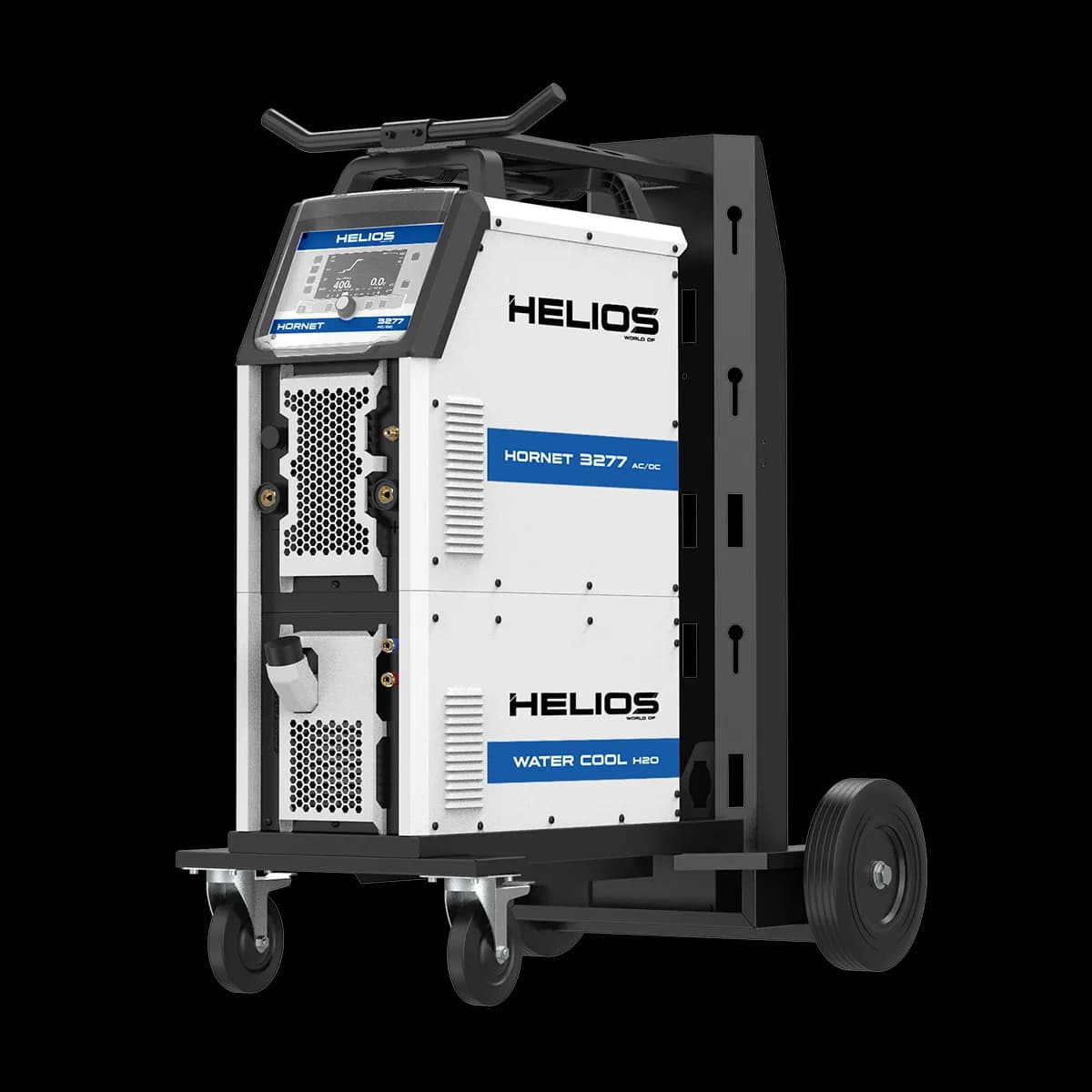
Why alternating current
Aluminium is covered by an oxide layer that melts above 2,000 °C, while the metal underneath melts at about 660 °C. With direct current the oxide does not break and the puddle will not wet. Alternating current solves it: the positive half-cycle cleans the oxide and the negative half-cycle penetrates.
Balance: cleaning versus penetration
Balance splits the time between the two half-cycles.
- More cleaning (more positive): wide white etched band beside the bead, but more heat on the tungsten.
- More penetration (more negative): deeper bead and a cooler tungsten, with less cleaning.
Start at around 30 % cleaning and adjust until you see a thin, even etched band. If the tungsten balls up heavily, you have too much cleaning.
Frequency: arc width
- Low frequency (60-80 Hz): wide, soft arc, good for filling and thick parts.
- High frequency (120-200 Hz): narrow, focused arc, ideal for thin sheet, inside corners and precision.
The tungsten
For AC on an inverter use lanthanated or rare-earth tungsten, ground to a slightly truncated point. Pure balled tungsten belongs to transformer machines.
Preparation is everything
A stainless steel brush kept for aluminium only, degrease with solvent and weld the same day. Aluminium does not forgive dirt: porosity almost always starts there.